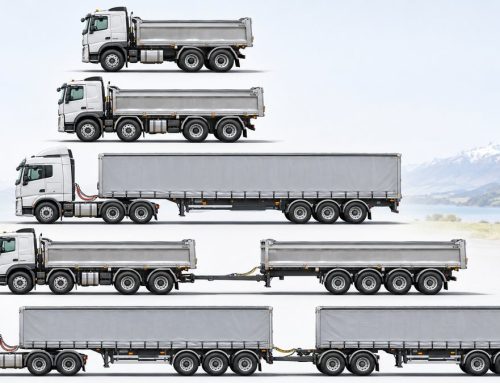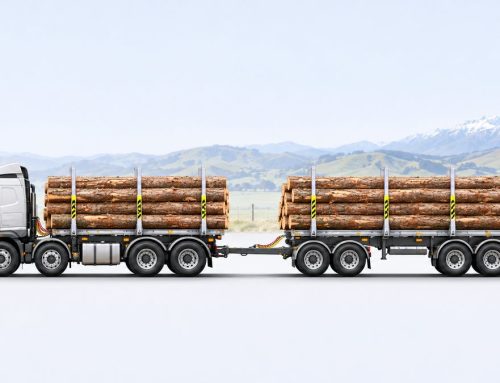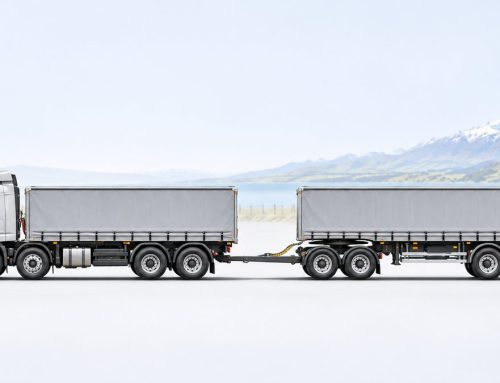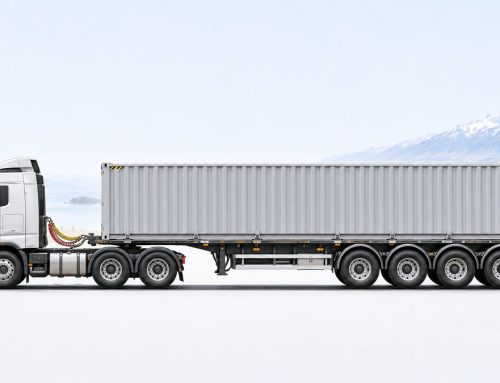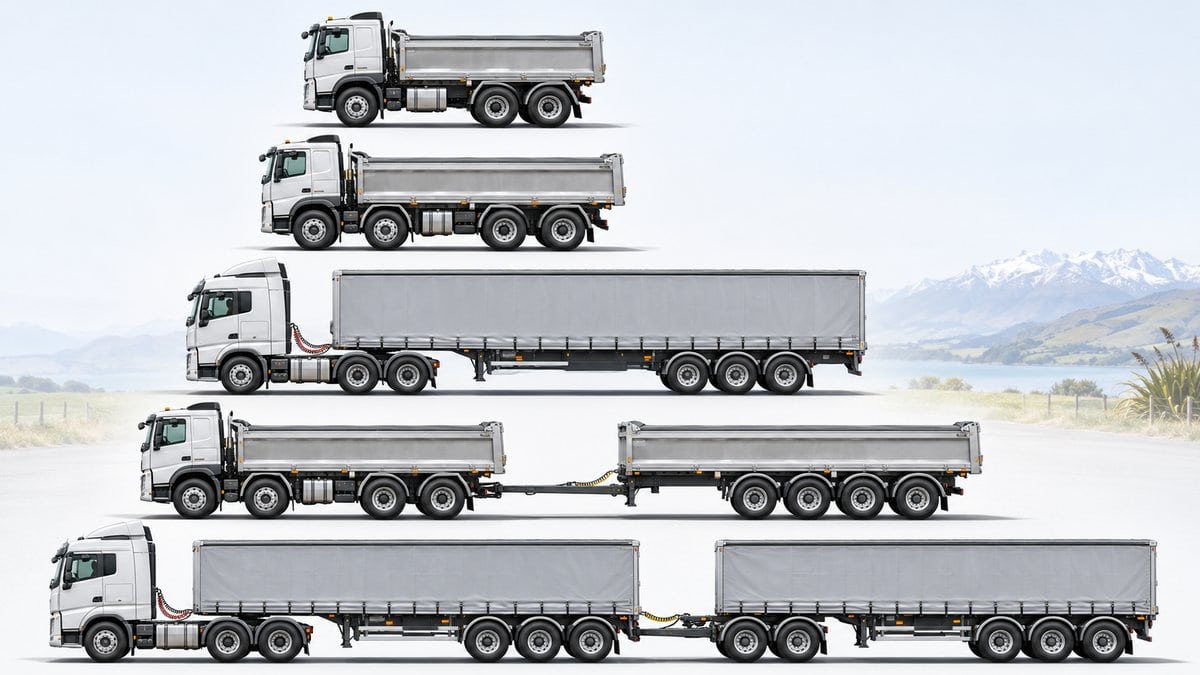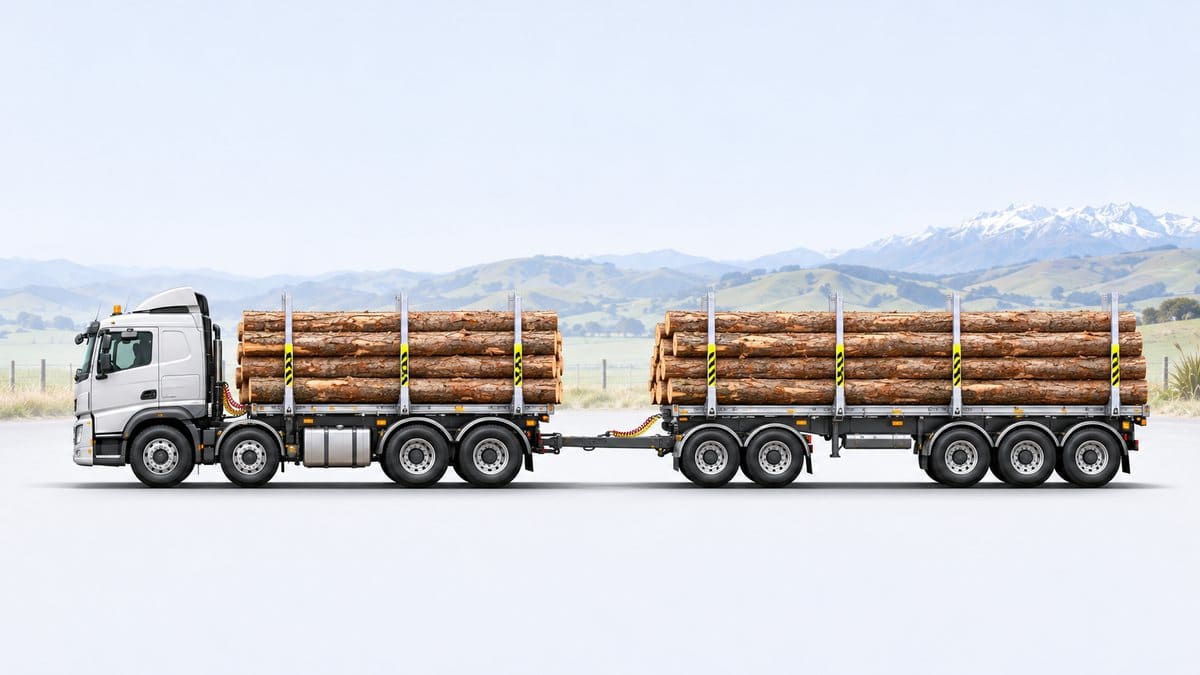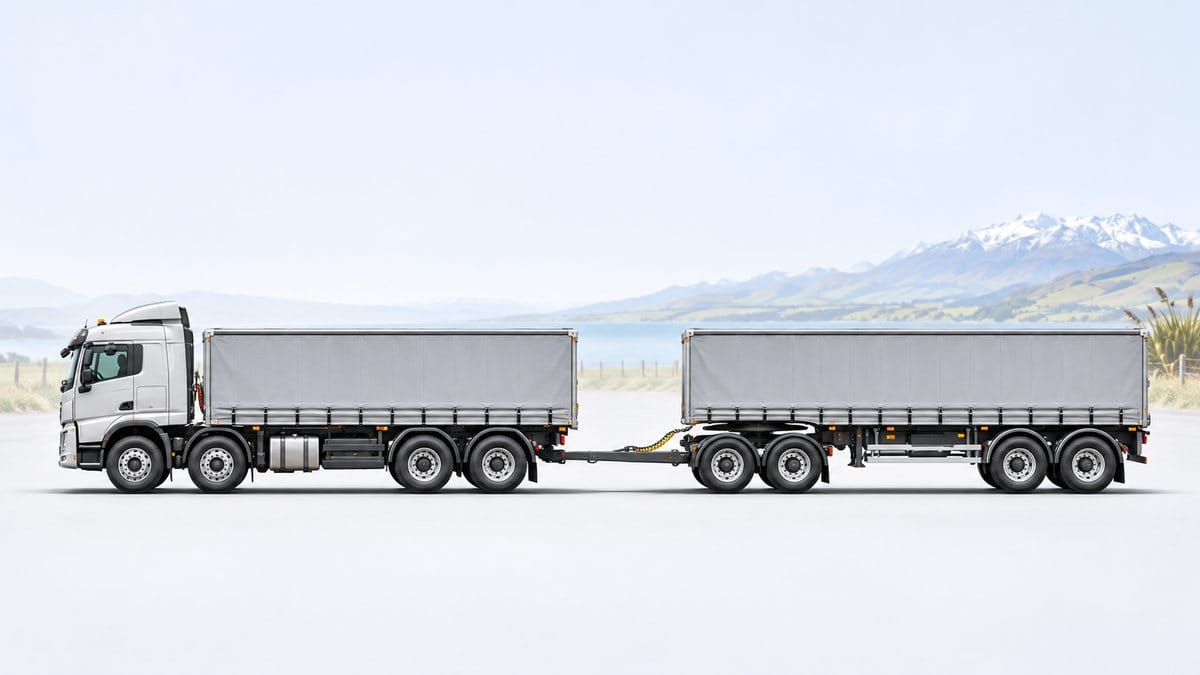
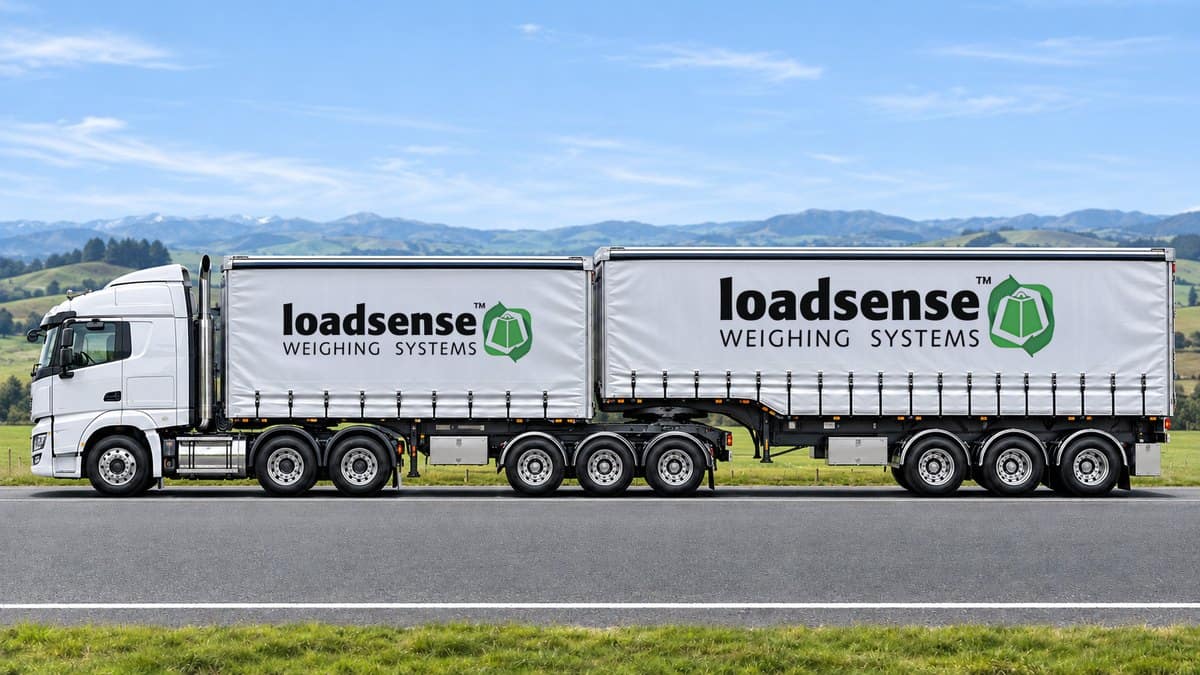
A B-train is a tractor unit pulling two semi-trailers. It is one of only two combination types in New Zealand able to run above 44 tonnes without exceeding axle group limits, the other being the truck and full trailer, which makes it a mainstay of line haul, container and bulk transport.
How a B-train couples together
The first trailer, often called the lead or A trailer, connects to the tractor’s fifth wheel in the normal way. What makes it a B-train is a second fifth wheel mounted on the rear of that lead trailer, directly above its axles. The second trailer couples to it. There is no drawbar and no dolly, so the combination has only two articulation points, which makes it stable on the road and predictable to reverse.
In Australia the same layout is called a B-double. The terms describe the same coupling arrangement, although the dimensions and weight limits in each country are different.
Eight-axle and nine-axle B-trains
| Combination | Tractor | Lead trailer | Rear trailer |
|---|---|---|---|
| Eight-axle | 6×4 (3 axles) | Tri-axle | Tandem |
| Eight-axle (alternative) | 6×4 (3 axles) | Tandem | Tri-axle |
| Nine-axle | 6×4 (3 axles) | Tri-axle | Tri-axle |
Nine-axle B-trains built to an approved design can operate under a 50MAX or HPMV permit above 44 tonnes.
The four axle groups
- Steer axle: 6,000 kg on standard single tyres
- Drive tandem: typically 15,000 kg
- Lead trailer group: up to 18,000 kg for a tri-axle set at the widest spacing
- Rear trailer group: up to 18,000 kg for a tri-axle set, or typically 15,000 kg for a tandem
These are general access figures for twin-tyred axles. Higher axle limits are available on HPMV permits for approved routes.
Why B-trains are tricky to load
The lead trailer’s axle group carries weight from both trailers: its own load, plus the front of the rear trailer sitting on its fifth wheel. Load the rear trailer heavy at the front and the lead trailer’s axles go over, even though that trailer might be half empty. In the same way, weight at the front of the lead trailer goes onto the tractor’s drive tandem.
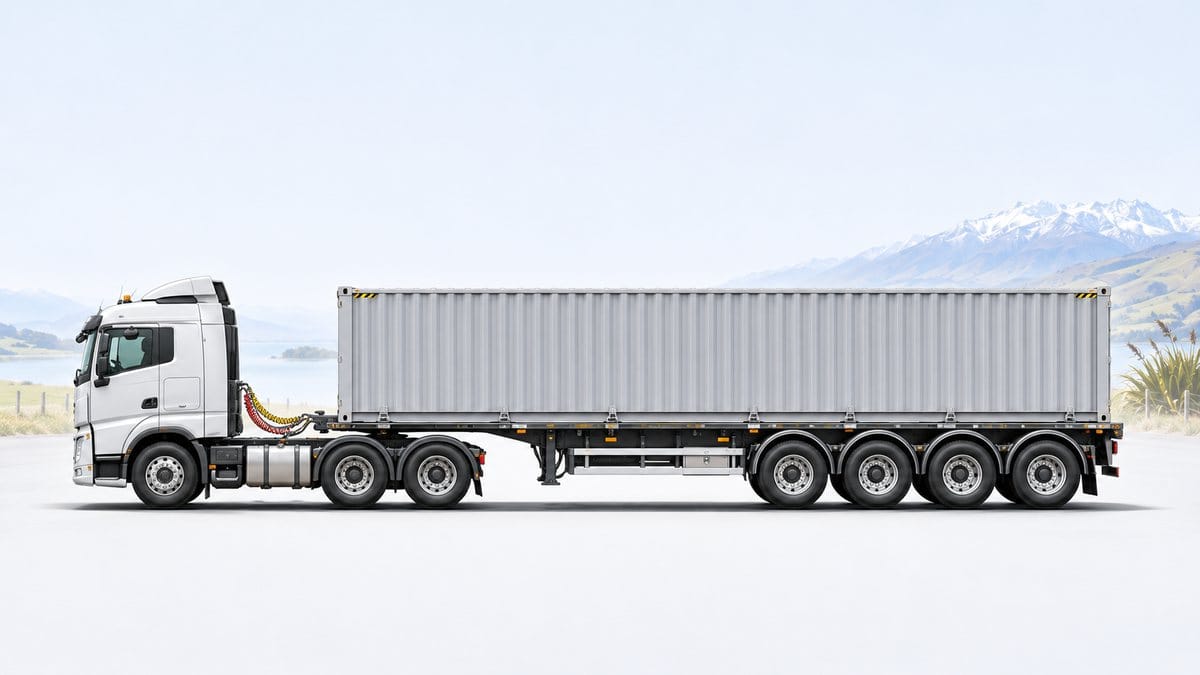
With containers this becomes a real problem, because the driver rarely knows how each box has been packed. Two containers of the same declared weight can put very different loads on each group depending on which trailer they sit on and which way round they face.
Weighing a B-train onboard
A B-train weighs as four groups: steer, drive, lead trailer and rear trailer. Most B-train trailers run on air suspension, so each trailer group is read by an air pressure sensor on its levelling valve. Trailer sensors report wirelessly, which suits fleets where tractors and trailer sets are swapped around. The tractor’s drive group is measured the same way, and the steer axle with a height sensor or an air sensor, depending on the front suspension.
With all four groups on screen, the driver can decide which container goes on which trailer before the crane lets go, and bulk loads can be topped up group by group.
B-train or semi-trailer?
A B-train carries more than a single semi-trailer and can split into two shorter trailers for delivery. A semi is simpler, lighter and easier to get into tight sites.
More in this series
- NZ truck and trailer configurations: the complete guide
- 4×2 and 6×2 trucks
- 6×4 trucks
- 8×4 trucks
- Truck and trailer combinations
- Semi-trailers
- 50MAX and HPMV
Know every axle group weight before you leave the yard
The Loadsense Titan Pro onboard truck and trailer scale reads each axle group separately and shows the weights on your phone, so you can load to the limit of your configuration with confidence. Try the free axle weight calculator, or contact the Loadsense team on +64 21 447 151 to talk through your truck and trailer setup.
Weights and limits in this article are a general guide, correct to the best of our knowledge in November 2026. Limits depend on tyre type, axle spacing, vehicle ratings and permit conditions, so always confirm against the current Vehicle Dimensions and Mass Rule, NZTA guidance and your own permit. An onboard scale is a loading aid and does not replace a certified weighbridge.