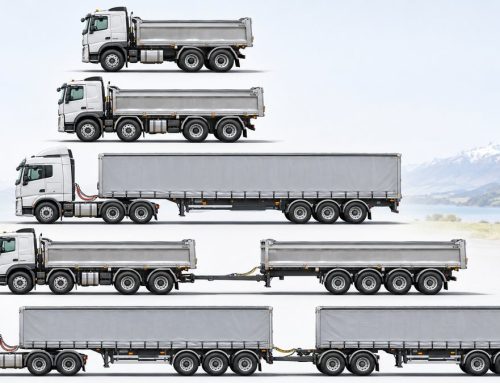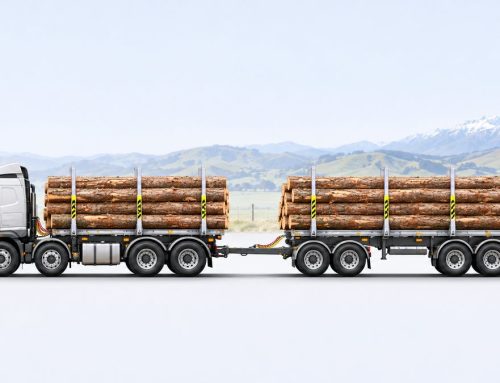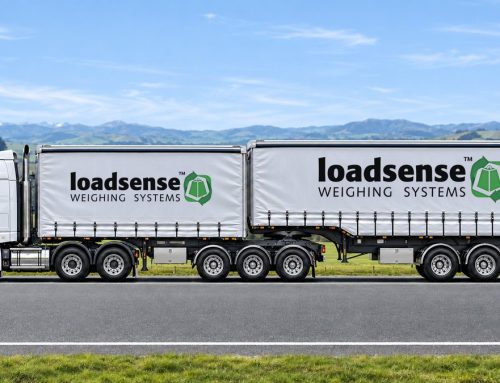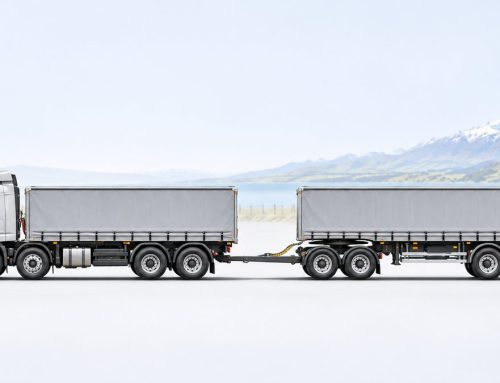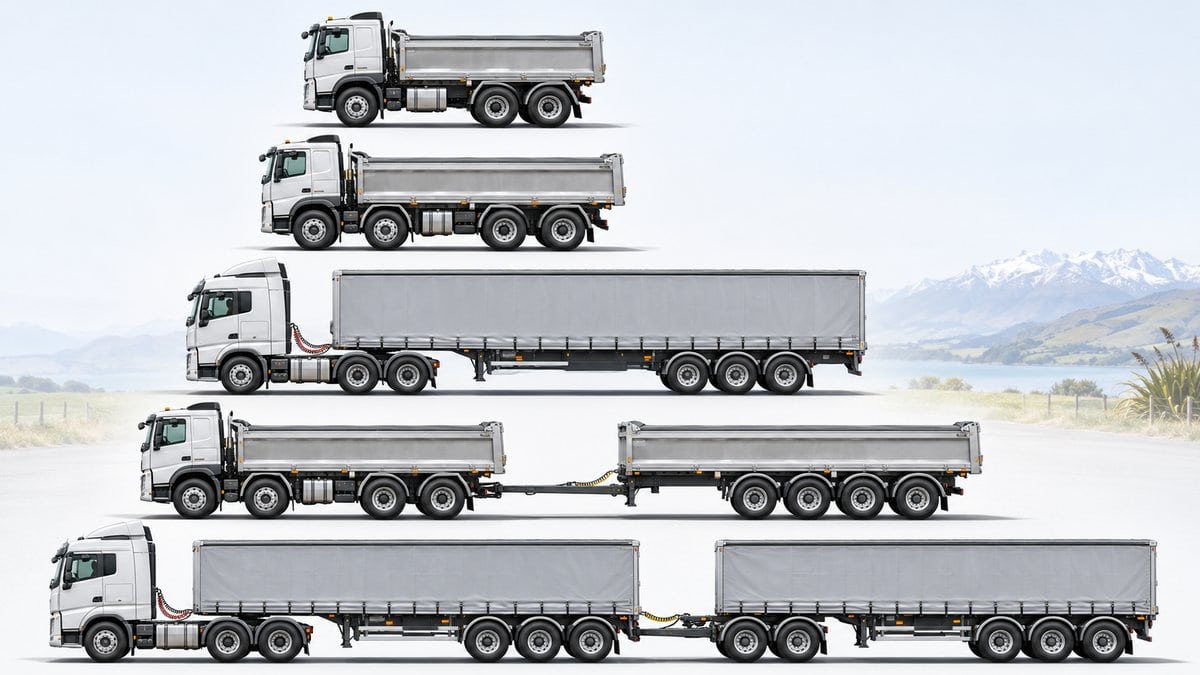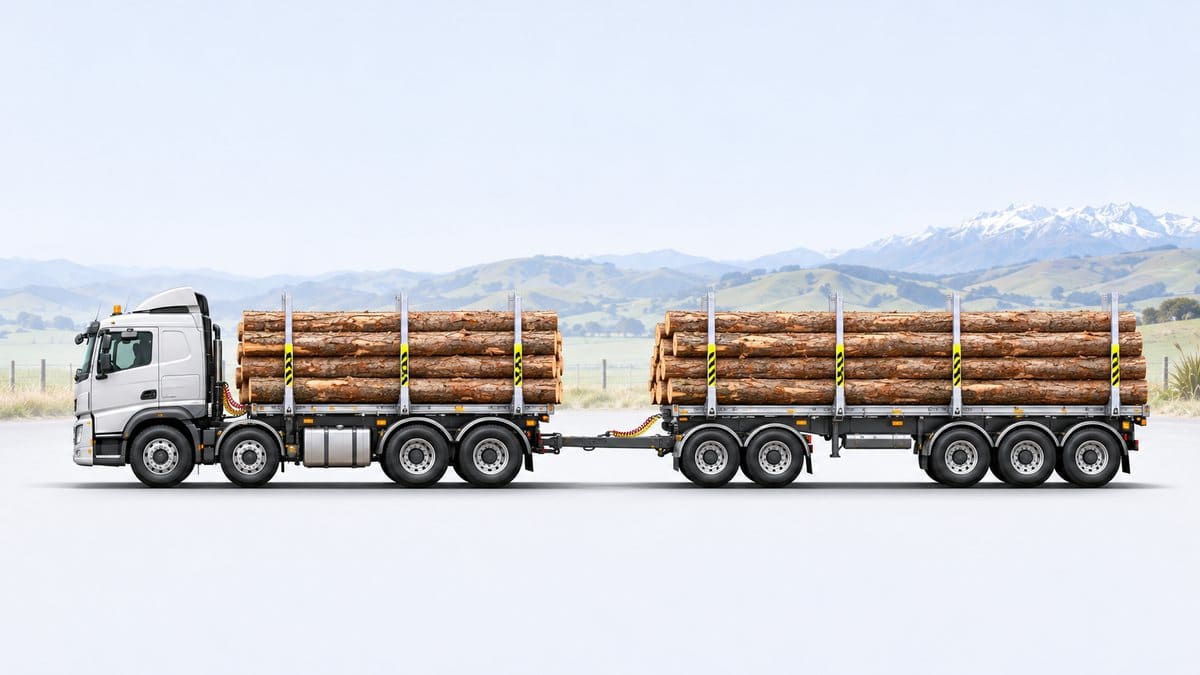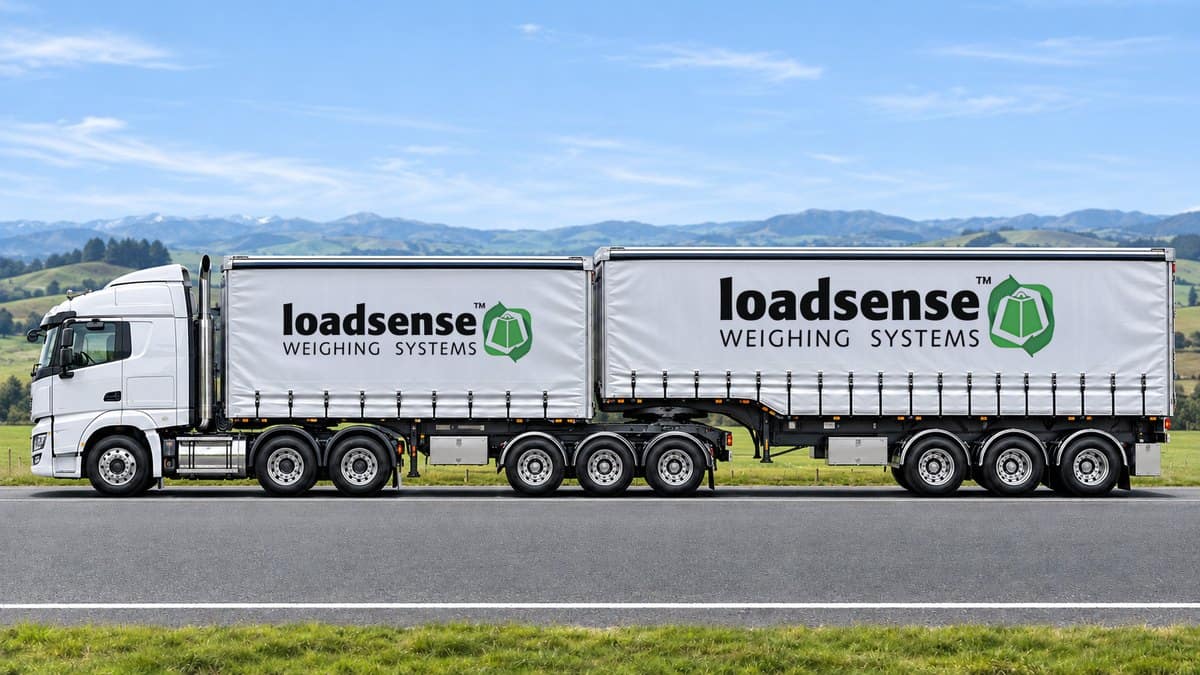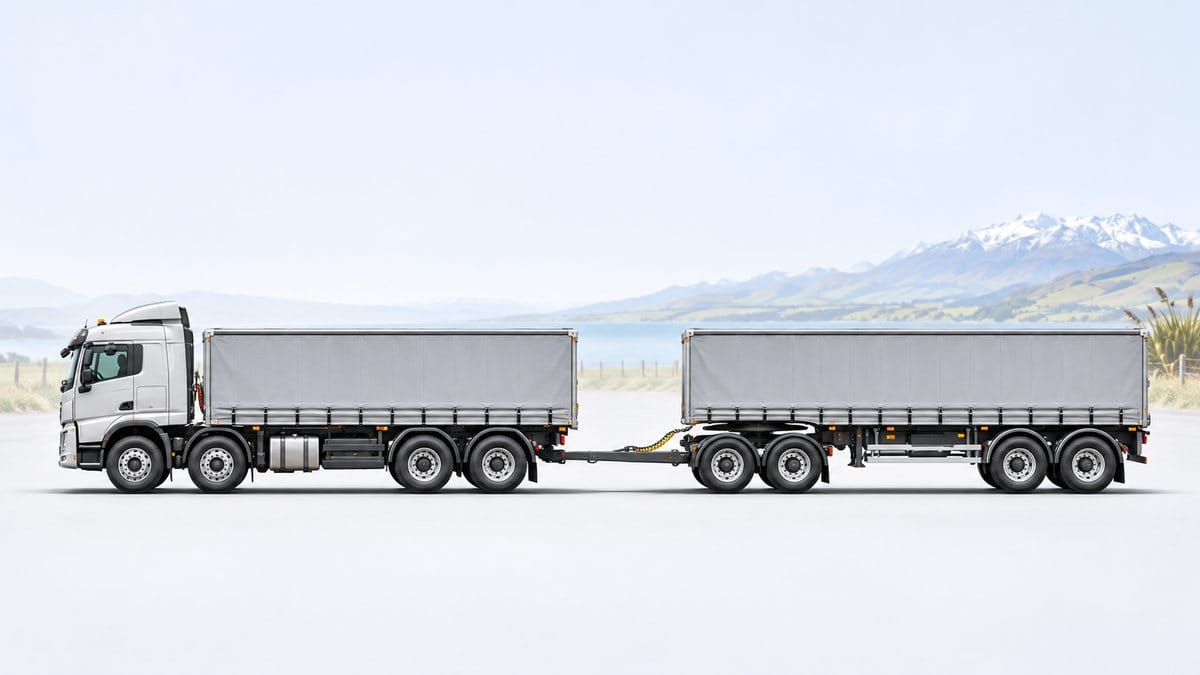
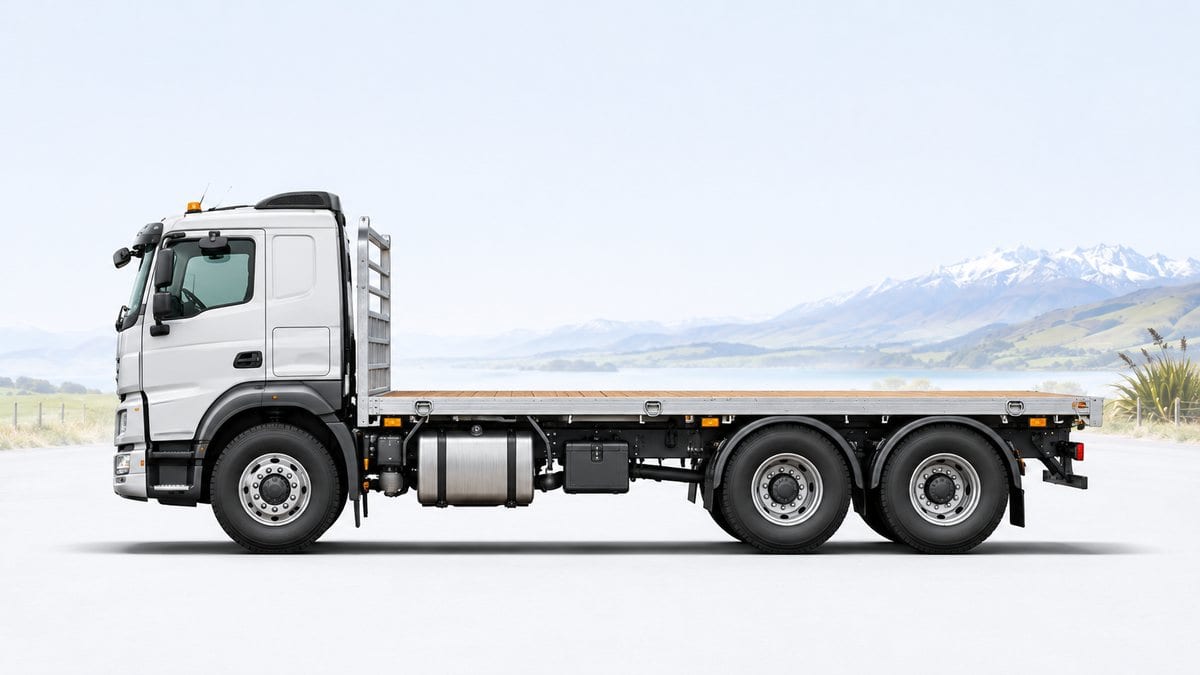
The 6×4 is the all-rounder of the New Zealand fleet. It is the standard layout for six-wheeler tippers, hook lift and skip trucks, concrete mixers and most tractor units, and it is the base that many trailer combinations are built on.
What 6×4 means
Six wheel positions, four of them driven. A 6×4 has a single steer axle at the front and two driven axles at the rear, working together as a tandem axle set. Driving both rear axles gives the traction needed for quarries, forestry roads and building sites.
6×4 axle groups and limits
| Axle group | Typical general access limit |
|---|---|
| Steer axle, single standard tyres | 6,000 kg |
| Tandem drive, twin tyres | 15,000 kg at the most common spacing (14,500 kg if the axles are under 1.3 m apart) |
That puts a typical 6×4 rigid at about 21,000 kg by axle limits. Larger front tyres allow a heavier steer axle, and the gross weight is also subject to the truck’s wheelbase and its manufacturer ratings, so the legal figure for a specific truck may be different.
How a 6×4 gets overloaded
On a tipper, the load sits almost entirely over the tandem. Fill the body by eye with wet aggregate and the drive group can be well over 15 tonnes while the steer axle is still light. On a hook truck, the position of the bin on the rails decides how much weight goes forward. On a mixer, the drum puts a predictable share on the front axle, which is why steer axle weight needs watching as closely as the rear.
The fix in each case is the same: know the weight on each group, not just the total.
As a tractor unit
Fit a fifth wheel and the 6×4 becomes the tractor for a semi-trailer or B-train. The same steer and tandem limits apply, but now the trailer decides how much weight lands on the drive group through the kingpin. Fifth wheel position matters too: moving it forward shifts load from the drive axles to the steer axle.
Weighing a 6×4 onboard
A 6×4 weighs as two groups.
- Drive tandem on air suspension: one air pressure sensor per levelling valve reads the whole tandem as a group.
- Drive tandem on mechanical suspension: a height sensor measures deflection as the springs compress under load.
- Steer axle: usually on springs, so a height sensor is fitted, or an air sensor where the front axle has air bags.
Once calibrated against a weighbridge with the truck empty and loaded, the system shows steer, drive and gross weights on the driver’s phone during loading. The loader driver can stop at the right bucket, and the truck leaves legal the first time.
6×4 or 8×4?
If payload is the priority, the 8×4 carries more because a twin-steer set is allowed more weight than a single steer axle. The 6×4 is lighter, cheaper to run and turns tighter, which is why it remains the default for town work and as a tractor unit.
More in this series
- NZ truck and trailer configurations: the complete guide
- 4×2 and 6×2 trucks
- 8×4 trucks
- Truck and trailer combinations
- B-trains
- Semi-trailers
- 50MAX and HPMV
Know every axle group weight before you leave the yard
The Loadsense Titan Pro onboard truck and trailer scale reads each axle group separately and shows the weights on your phone, so you can load to the limit of your configuration with confidence. Try the free axle weight calculator, or contact the Loadsense team on +64 21 447 151 to talk through your truck and trailer setup.
Weights and limits in this article are a general guide, correct to the best of our knowledge in November 2026. Limits depend on tyre type, axle spacing, vehicle ratings and permit conditions, so always confirm against the current Vehicle Dimensions and Mass Rule, NZTA guidance and your own permit. An onboard scale is a loading aid and does not replace a certified weighbridge.