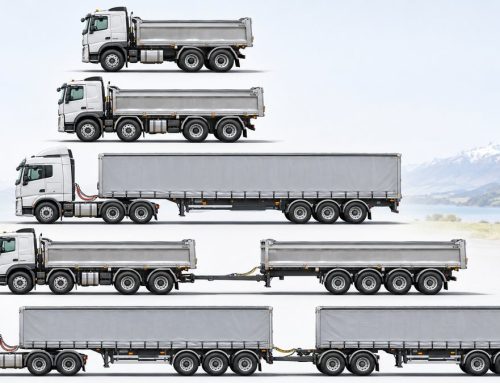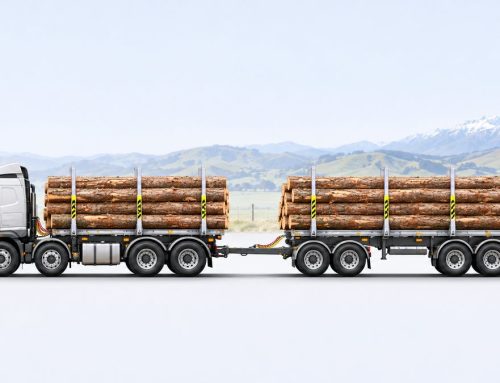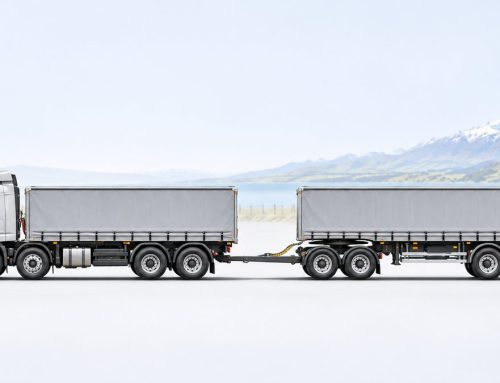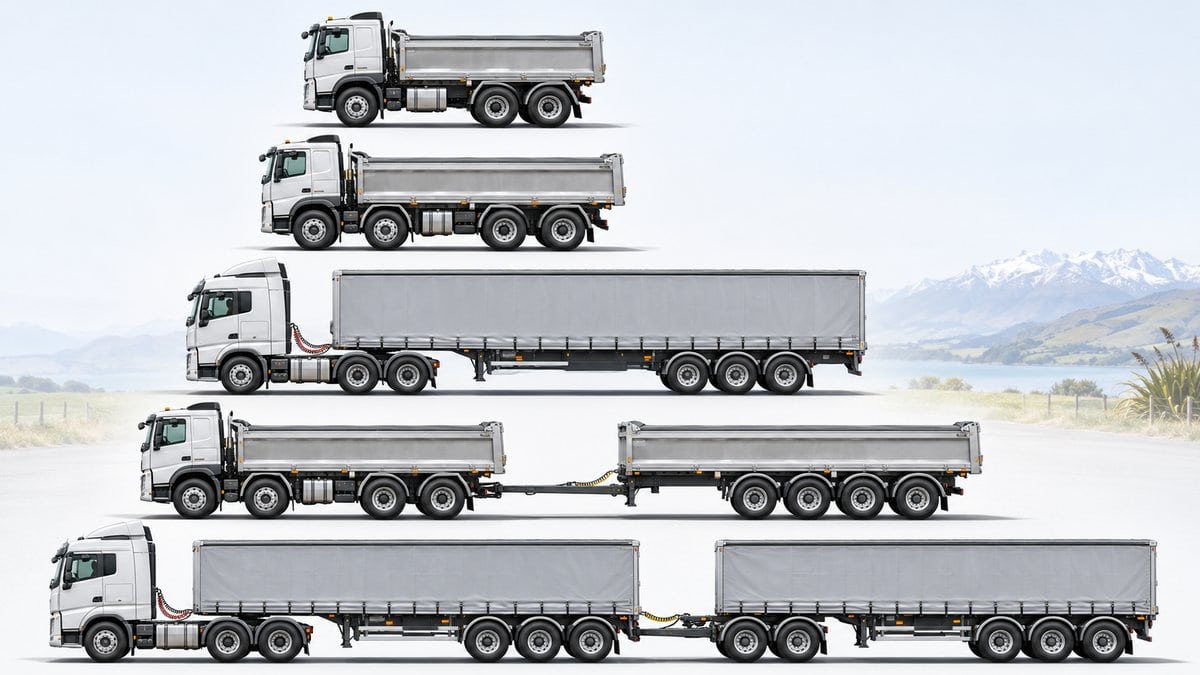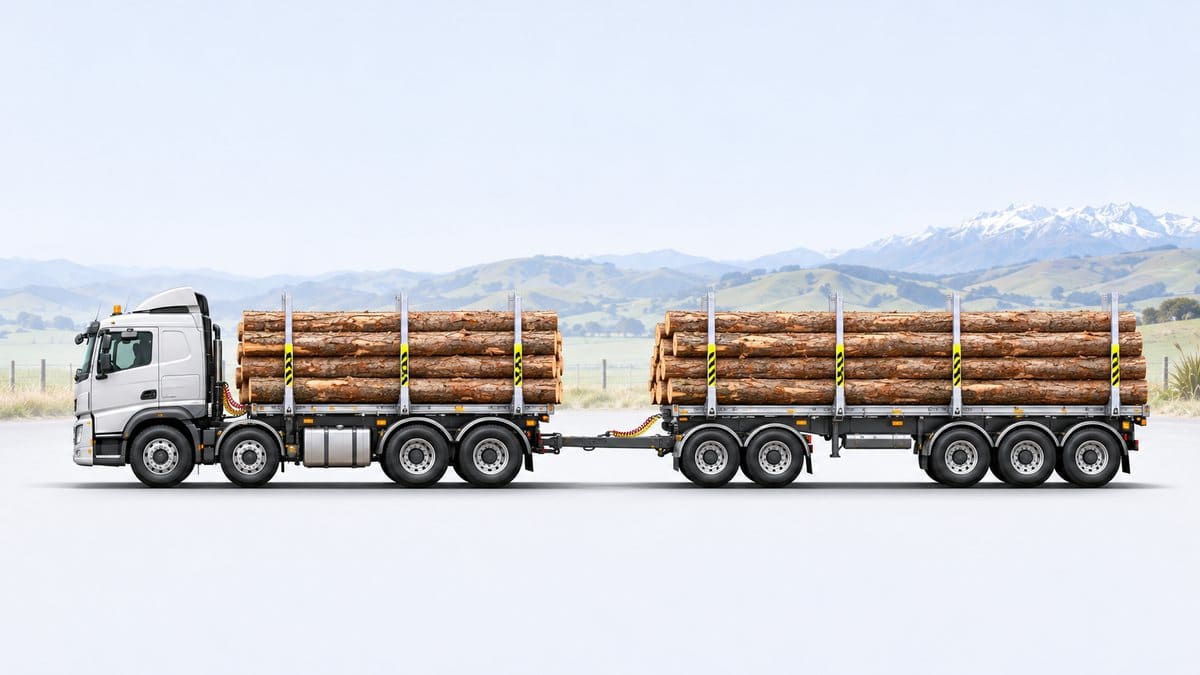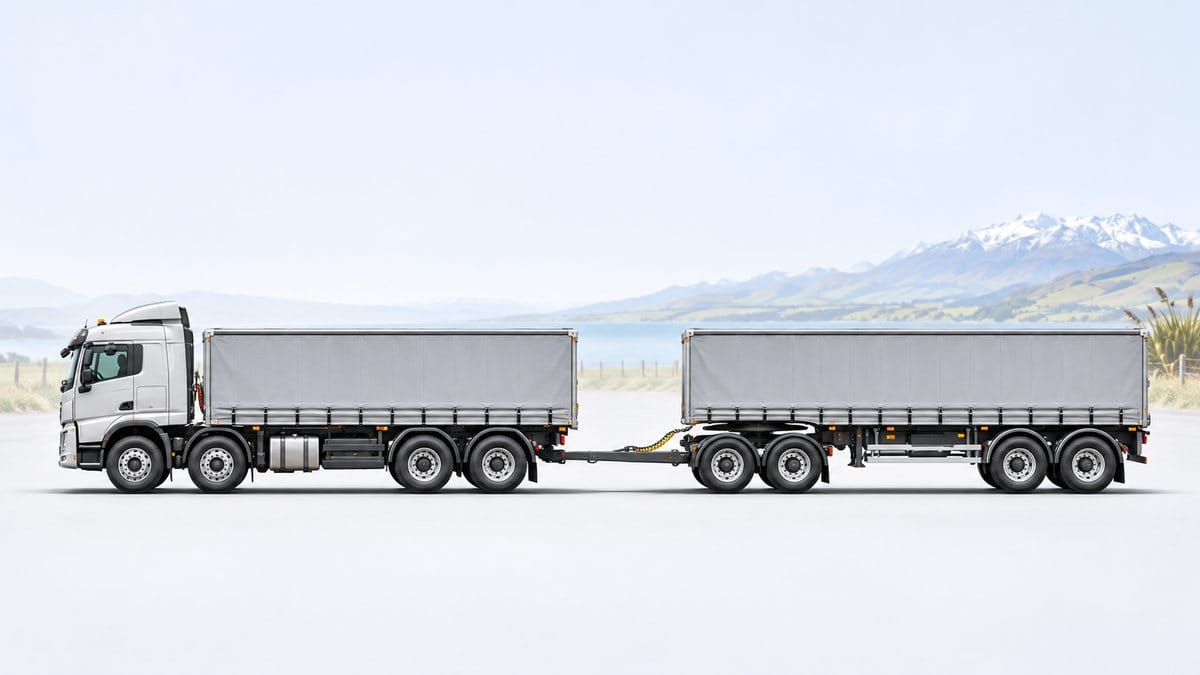
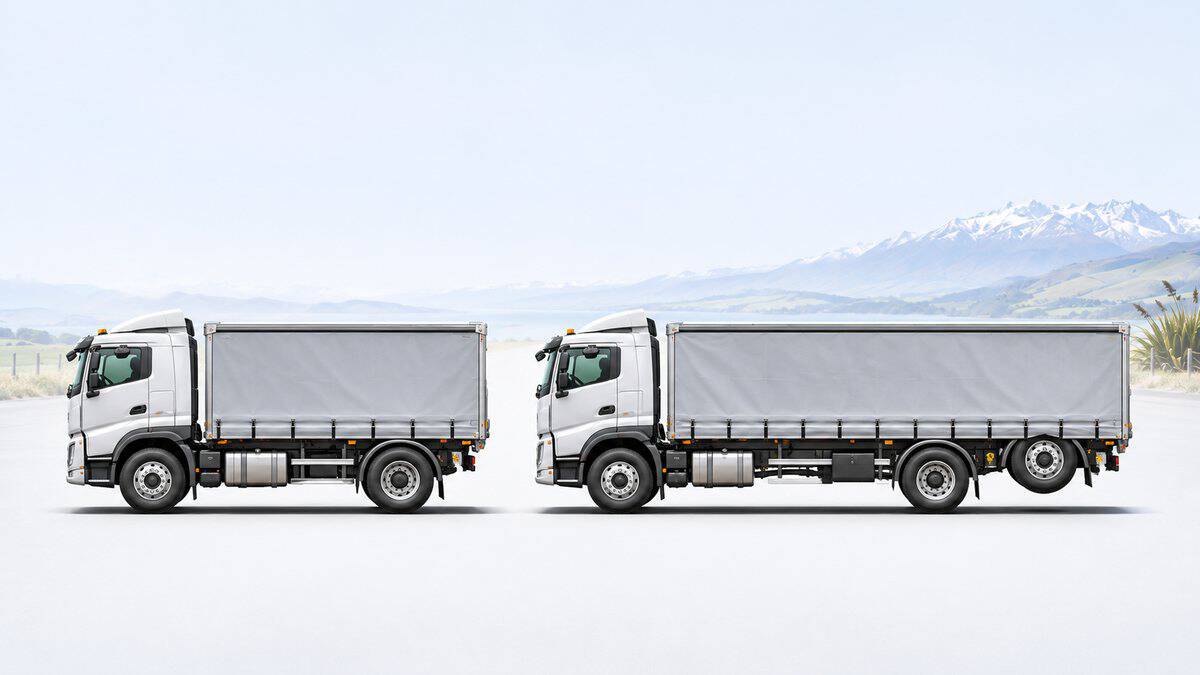
The 4×2 and the 6×2 are the smallest heavy truck layouts on New Zealand roads, and the ones most often overloaded without anyone noticing. They do metro deliveries, courier line haul, small tipper work and trade jobs, usually with mixed loads that change at every stop.
What 4×2 and 6×2 mean
A 4×2 has two axles and four wheel positions, with only the rear axle driven. A 6×2 adds a third axle that is not driven. That extra axle may sit behind the drive axle (a tag axle) or in front of it (a pusher axle), and it is often liftable so the truck runs on two axles when empty.
How the axles are grouped
| Layout | Front | Rear | Axle groups |
|---|---|---|---|
| 4×2 | Single steer axle | Single twin-tyred drive axle | 2 |
| 6×2 | Single steer axle | Tandem set, one axle driven | 2 |
Weight limits that apply
Under general access, a single axle on standard single tyres is limited to 6,000 kg, and a single twin-tyred axle to 8,200 kg. Add those together and a typical 4×2 tops out at around 14,200 kg by axle limits, and many are plated lower by the manufacturer. On a 6×2 the two rear axles form a tandem set, and the limit for that set depends on the tyres and on whether the suspension shares load between the two axles, so check the figures for your own truck.
The lower of the legal limit and the manufacturer’s rating always applies. A 4×2 with a gross vehicle mass of 12,000 kg cannot carry more just because the axle limits would allow it.
Where these trucks get caught out
- Rear axle overload. With one twin-tyred axle carrying most of the payload, a pallet or two placed behind the axle can push it over while the gross weight still looks fine.
- Diminishing loads. As freight comes off the back during a delivery run, weight shifts forward onto the steer axle.
- Lift axles. A 6×2 running with its tag axle raised is effectively a 4×2. The axle needs to be down, and sharing load properly, before the truck is loaded to tandem weights.
- Tail lifts and truck-mounted cranes. Permanent equipment at one end of the truck eats into the capacity of the nearest axle.
Weighing a 4×2 or 6×2 onboard
Both layouts weigh as two groups: steer and rear. On a truck with rear air suspension, one air pressure sensor on the levelling valve circuit reads the rear group. On leaf springs, a height sensor measures spring deflection as the truck is loaded. Many of these trucks have a spring front axle, so the steer group is measured with a height sensor too.
The result is a live steer weight, rear weight and gross weight on the driver’s phone, which is enough to place freight correctly and to know when the truck is full.
Is a 4×2 or 6×2 right for the job?
A 6×2 gives more payload than a 4×2 on the same footprint, with lower purchase cost and tyre wear than a 6×4, but it has less traction off sealed roads. If the truck regularly works on soft ground or steep sites, a 6×4 is usually the better choice.
More in this series
- NZ truck and trailer configurations: the complete guide
- 6×4 trucks
- 8×4 trucks
- Truck and trailer combinations
- B-trains
- Semi-trailers
- 50MAX and HPMV
Know every axle group weight before you leave the yard
The Loadsense Titan Pro onboard truck and trailer scale reads each axle group separately and shows the weights on your phone, so you can load to the limit of your configuration with confidence. Try the free axle weight calculator, or contact the Loadsense team on +64 21 447 151 to talk through your truck and trailer setup.
Weights and limits in this article are a general guide, correct to the best of our knowledge in November 2026. Limits depend on tyre type, axle spacing, vehicle ratings and permit conditions, so always confirm against the current Vehicle Dimensions and Mass Rule, NZTA guidance and your own permit. An onboard scale is a loading aid and does not replace a certified weighbridge.