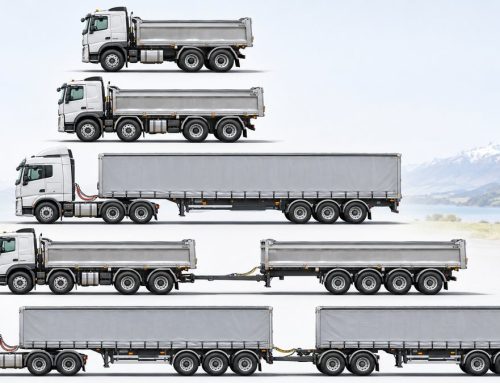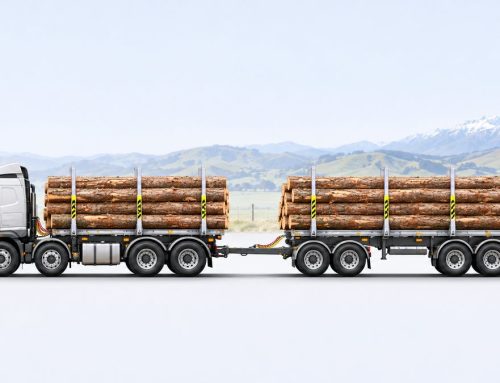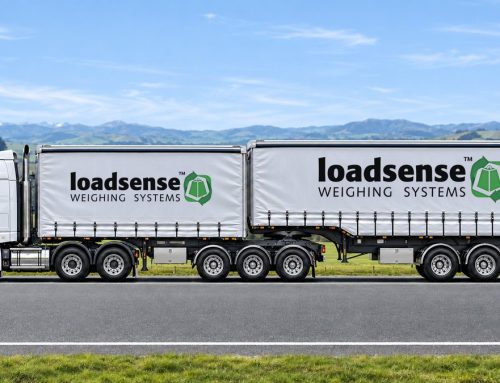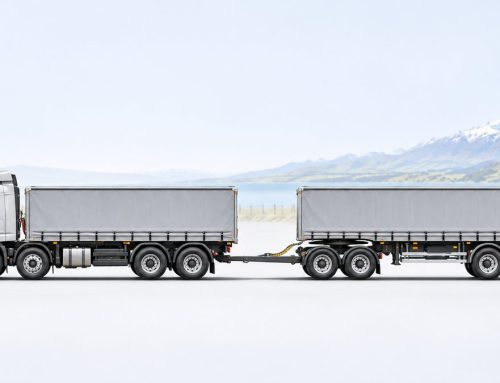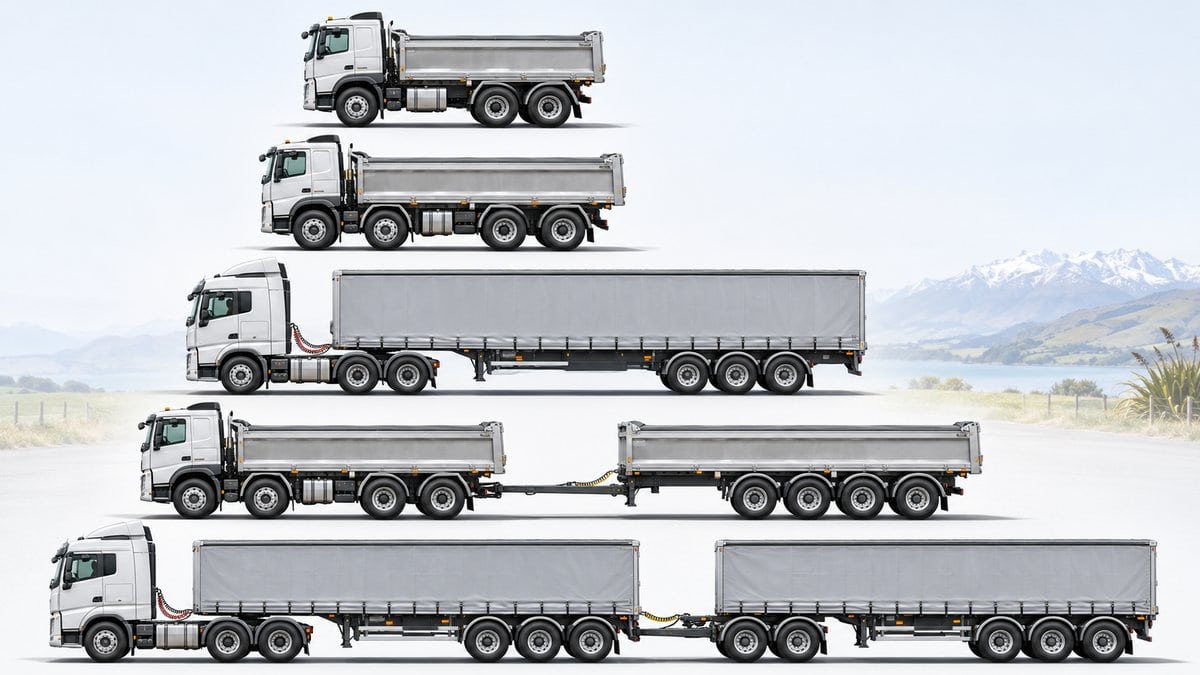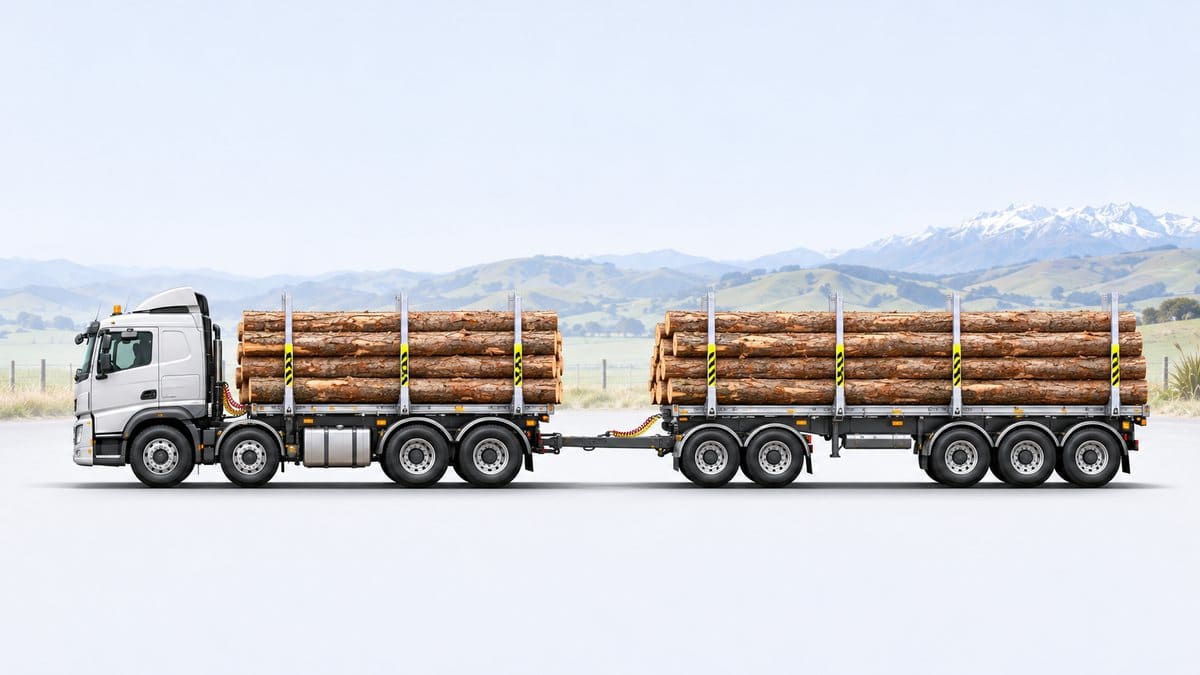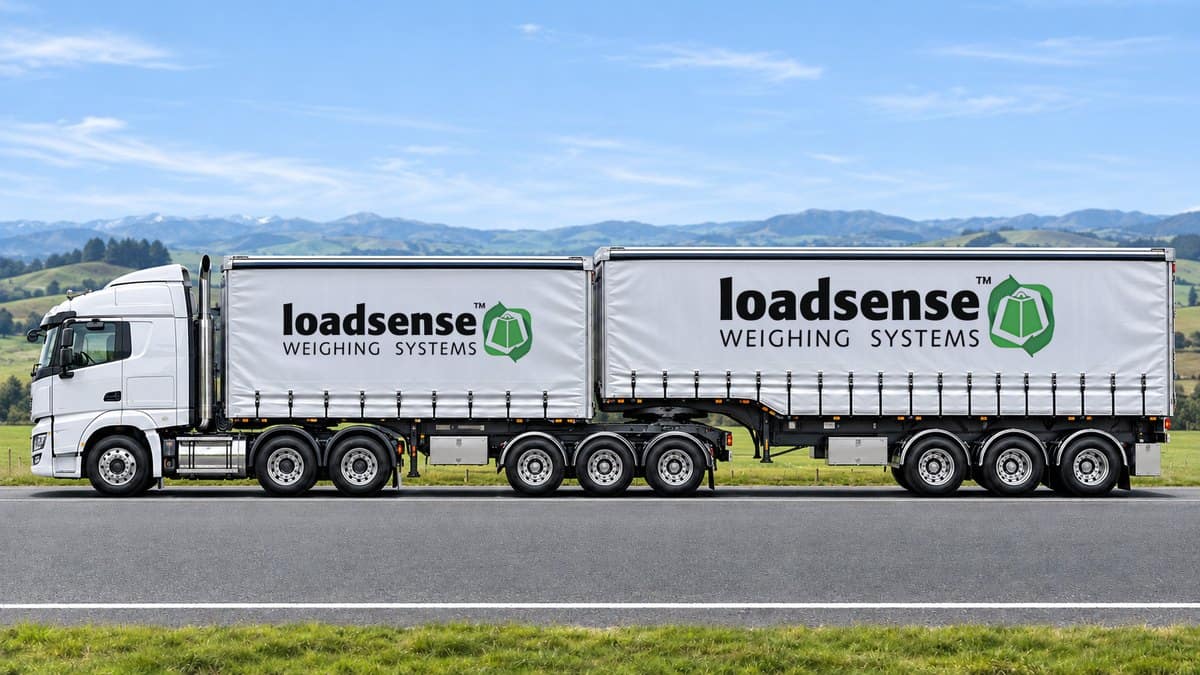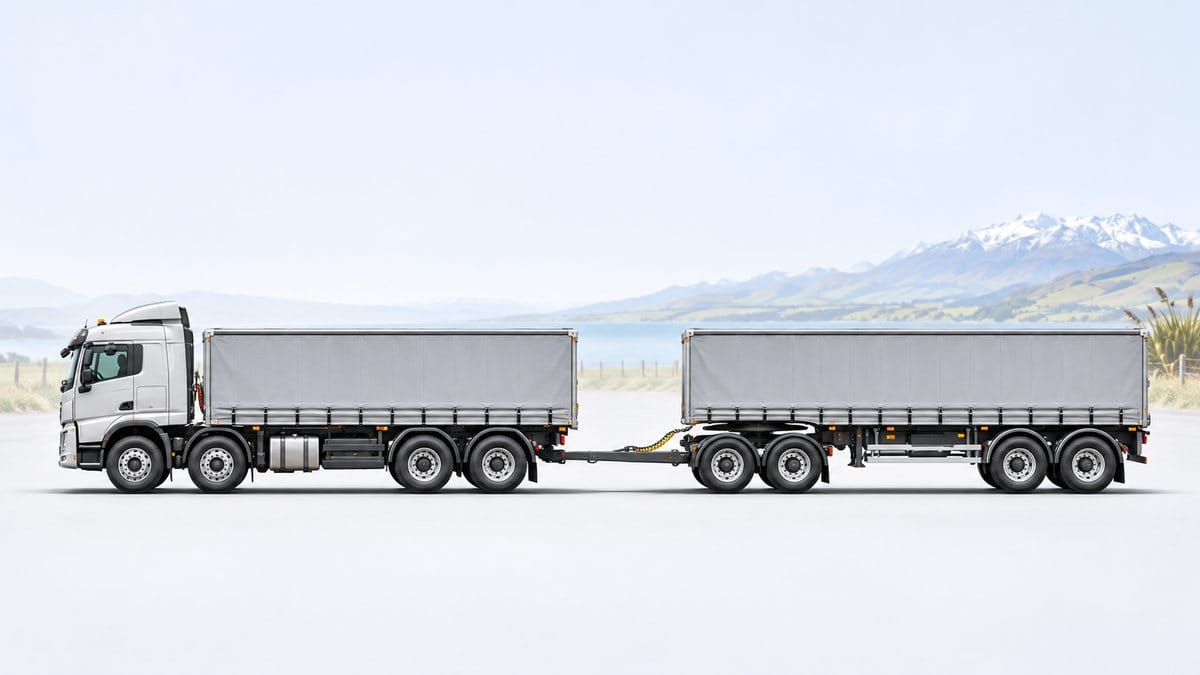
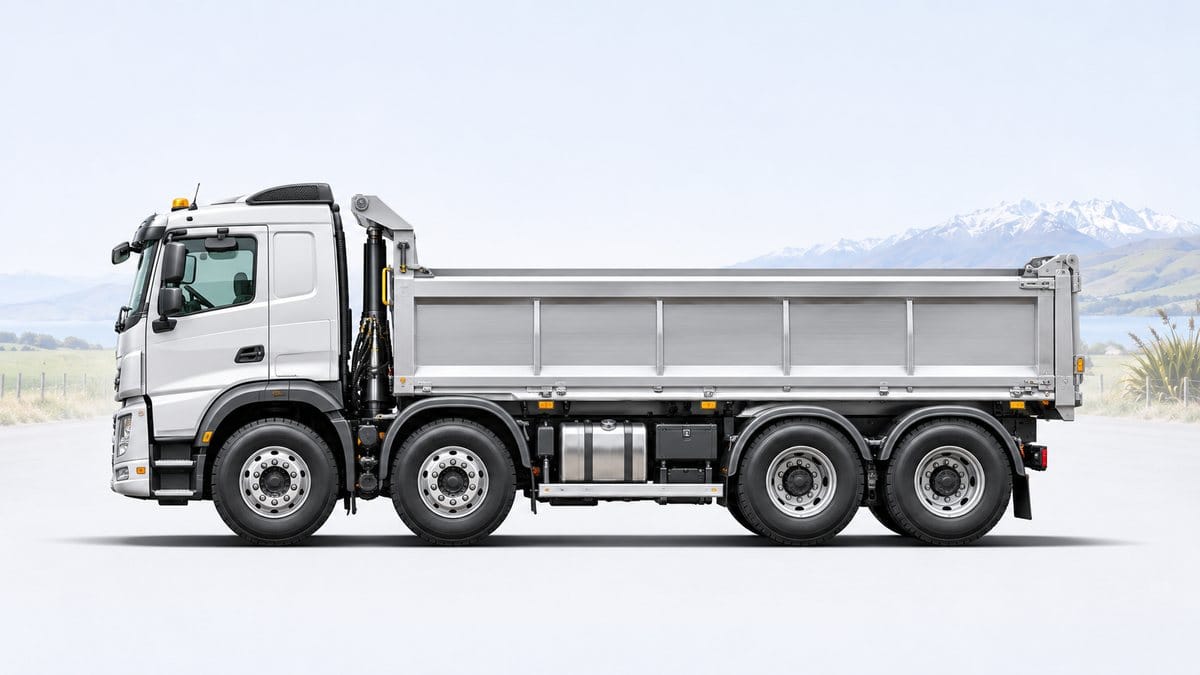
The 8×4 eight-wheeler is a New Zealand favourite. You will find it under tipper bodies, bulk bins, log bolsters, stock crates and curtain-siders, working alone or towing a full trailer.
What 8×4 means
Eight wheel positions, four of them driven. An 8×4 has four axles: two steering axles at the front, known as a twin-steer set, and two driven axles at the rear forming a tandem set.
8×4 axle groups and limits
| Axle group | Typical general access limit |
|---|---|
| Twin-steer set | 11,000 kg |
| Tandem drive, twin tyres | 15,000 kg at the most common spacing |
By axle limits that gives a typical 8×4 rigid around 26,000 kg, against about 21,000 kg for a 6×4. The gross figure for any particular truck also depends on its wheelbase, tyres and manufacturer ratings.
Why the twin-steer is the hard part
The extra front axle is what gives the 8×4 its payload advantage, and it is also where most eight-wheelers run into trouble. The body starts close behind the cab, so anything loaded at the front of the deck lands on the twin-steer set. A load that is heavy at the headboard, or a truck-mounted crane behind the cab, can put the front group over 11,000 kg well before the truck reaches its gross weight.
The two steer axles also need to share load evenly. Front suspension that is worn or poorly set up can leave one axle carrying more than its share even when the set as a whole is legal.
Towing a trailer
The 8×4 is the usual towing unit in a New Zealand truck and trailer combination. A full trailer carries its own weight on its own axles, so hooking one up adds very little to the truck’s axle weights. It does add two more axle groups to keep legal, and it brings the combination’s gross limit into play.
Weighing an 8×4 onboard
An 8×4 weighs as two groups: twin-steer and drive.
- Drive tandem: an air pressure sensor per levelling valve on air suspension, or a height sensor on mechanical suspension.
- Twin-steer: most are on leaf springs, so a height sensor measures deflection across the front group. Where the front axles have air suspension, an air pressure sensor does the job.
Seeing both groups live is what lets a driver use the front axle capacity properly. On a tipper, it tells the loader where to place the last bucket. On a flat deck, it shows whether to slide a load back before the chains go on.
Common 8×4 questions
How much can an 8×4 tipper carry?
Payload is the legal gross weight minus the tare weight of the truck. With a typical legal gross around 26 tonnes, payload depends heavily on the body: a lightweight alloy body carries noticeably more than a steel one.
Can an 8×4 run above general access weights?
As part of a nine-axle truck and trailer on a permit, yes. See 50MAX and HPMV explained.
More in this series
- NZ truck and trailer configurations: the complete guide
- 4×2 and 6×2 trucks
- 6×4 trucks
- Truck and trailer combinations
- B-trains
- Semi-trailers
- 50MAX and HPMV
Know every axle group weight before you leave the yard
The Loadsense Titan Pro onboard truck and trailer scale reads each axle group separately and shows the weights on your phone, so you can load to the limit of your configuration with confidence. Try the free axle weight calculator, or contact the Loadsense team on +64 21 447 151 to talk through your truck and trailer setup.
Weights and limits in this article are a general guide, correct to the best of our knowledge in November 2026. Limits depend on tyre type, axle spacing, vehicle ratings and permit conditions, so always confirm against the current Vehicle Dimensions and Mass Rule, NZTA guidance and your own permit. An onboard scale is a loading aid and does not replace a certified weighbridge.